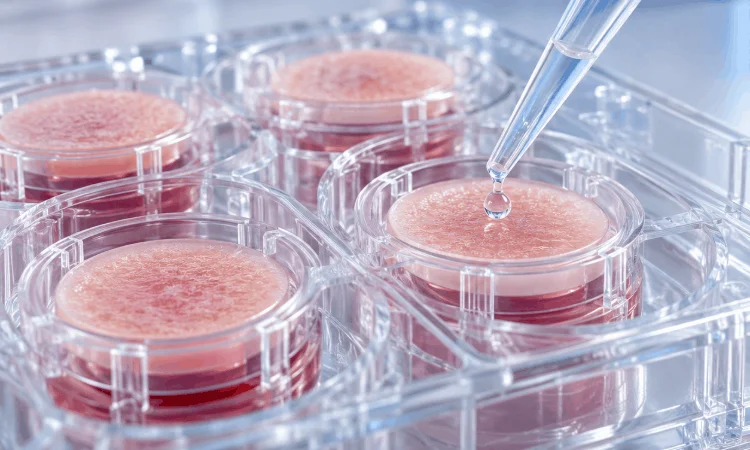
What Is the In Vitro Mammalian Cell Micronucleus Test?
The In Vitro Mammalian Cell Micronucleus Test is one of the key genotoxicity tests conducted to assess chromosomal damage and genomic instability in mammalian cells. Conducted in accordance with the OECD TG 487 guideline, this study is used to determine a substance’s potential to cause chromosome breaks (clastogenicity) or changes in chromosome number (aneuploidy).
Widely used in safety assessments of pharmaceuticals, medical devices, biocidal products, cosmetic raw materials, chemicals, and newly developed products, this test is recognized as a fundamental component of genetic toxicology studies.
At NanoTox, within our Genetic Toxicology Unit, we offer In Vitro Mammalian Cell Micronucleus Test services in accordance with GLP (Good Laboratory Practice) principles and international standards.
Purpose of the In Vitro Mammalian Cell Micronucleus Test
This test aims to determine a substance’s potential to cause chromosomal damage in mammalian cells.
Through these studies:
- Genotoxic risk is assessed,
- Chromosomal damage is detected,
- Product safety studies are supported,
- Regulatory requirements are met,
- Contributions are made to human health risk assessments.
The data obtained helps establish the product’s genetic safety profile.
What Is a Micronucleus?
Micronuclei are small nuclear structures consisting of chromosome fragments or entire chromosomes that fail to incorporate into the main nucleus during cell division.
These formations may indicate:
- DNA damage,
- Chromosomal breaks,
- Chromosomal losses,
- Cellular genetic instability.
For this reason, micronucleus formation is considered an important biomarker in genotoxicity assessments.
Studies Conducted in Accordance with OECD TG 487
Studies conducted at NanoTox are carried out in accordance with OECD Test Guideline 487 – In Vitro Mammalian Cell Micronucleus Test.
Under this guideline:
- Appropriate mammalian cell lines are used,
- Metabolically activated and non-activated systems are evaluated,
- positive and negative controls are applied,
- cytotoxicity and micronucleus formation are analyzed together.
OECD TG 487 is one of the fundamental genotoxicity tests accepted by regulatory authorities worldwide.
Test Principle
During the test, mammalian cells are exposed to the test substance at specific concentrations. Following exposure, the micronuclei formed in the cells are evaluated using microscopy or image analysis systems.
Cell types frequently used in studies include:
- human lymphocytes,
- CHO cells,
- V79 cells,
- and TK6 cells
.
Additionally, the S9 metabolic activation system may be used to mimic mammalian metabolism.
Parameters Evaluated Within the Test Scope
Within the scope of the In Vitro Mammalian Cell Micronucleus Test:
- Micronucleus frequency,
- Chromosomal damage markers,
- Cytotoxicity assessments,
- Cell proliferation,
- Dose-response relationship,
- Metabolic activation effects are analyzed.
These evaluations ensure the scientific determination of the genotoxic potential of the tested substance.
Reliable Genetic Toxicology Studies with NanoTox
NanoTox conducts In Vitro Mammalian Cell Micronucleus Tests in accordance with OECD TG 487 and international quality standards, supported by a team of expert genetic toxicologists and modern laboratory infrastructure. We provide the reliable genotoxicity data required in the development processes of pharmaceuticals, medical devices, biocidal products, and chemical substances.
Please contact NanoTox for detailed information about the In Vitro Mammalian Cell Micronucleus Test and our other genetic toxicology services.