

Determination of Skin Corrosion Using In Vitro Methods
The most serious local toxic effect that can result from skin contact with chemicals is, without a doubt, corrosion. Corrosion is a severe condition characterized by necrosis, ulceration, and scar tissue formation, in which a substance causes irreversible damage to skin tissue. Corrosive substances, classified in the highest hazard category according to GHS (Globally Harmonized System) criteria, pose an unacceptable risk to user safety. Therefore, determining corrosion potential using accurate and reliable methods is both a legal requirement and an ethical responsibility. OECD TG 431 and OECD TG 430 are the two primary in vitro test guidelines used in this assessment. Our laboratory conducts tests in accordance with both guidelines under GLP principles, using validated tissue models.
The Scientific Basis and Importance of Skin Corrosion
Skin corrosion is the irreversible damage caused to the epidermis and dermis as a result of a substance coming into contact with the skin. This damage results in chemical burns, tissue necrosis, ulceration, and scar formation. Corrosive substances are typically strong acids (pH ≤2) or strong bases (pH ≥11.5) and rapidly destroy the skin barrier. However, pH value alone is not sufficient to determine corrosion potential; some substances can exhibit strong corrosive effects even at neutral pH. Therefore, validated biological test methods are required for corrosion assessment.
The importance of corrosion testing is not limited to classification and labeling alone. The safety precautions required for corrosive substances are much stricter than those for other substances. These substances require additional measures such as special storage conditions, personal protective equipment (chemical-resistant gloves, face shields, protective clothing), and emergency shower and eye wash stations. Furthermore, the transportation and disposal of corrosive substances are subject to specific regulations. Therefore, the accurate determination of corrosion potential forms the foundation of occupational health and safety practices.
In the past, corrosion assessment was conducted exclusively using in vivo animal tests (OECD TG 404). However, since these tests cause significant animal suffering, in vitro alternatives have been developed in accordance with the 3R principles. OECD TG 430 and TG 431 are the most widely used of these alternatives and are internationally recognized as validated methods. These methods completely eliminate the use of animals while ensuring the reliable determination of corrosion potential.
OECD TG 431: Reconstituted Human Epidermis (RhE) Corrosion Test
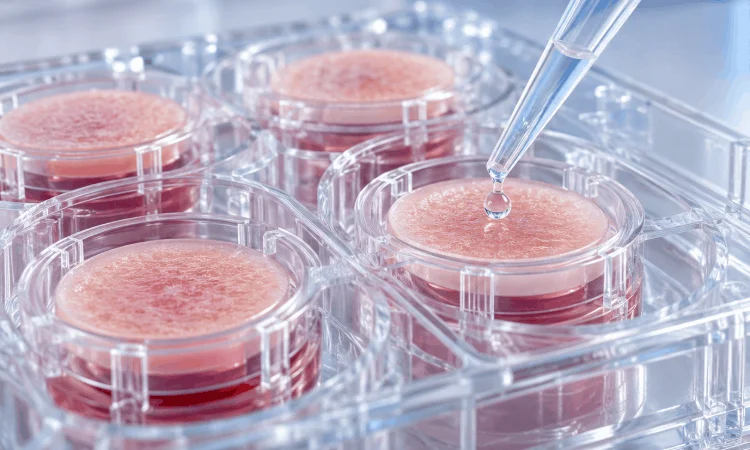
OECD TG 431 is an in vitro test guideline based on reconstituted human epidermis (RhE) models, used to assess the skin corrosion potential of chemical substances. This guideline was adopted in 2004 and updated in 2015 and 2019. Under TG 431, the corrosive potential of the test substance is evaluated using validated RhE models (EpiSkin™, EpiDerm™, SkinEthic™ RHE, LabCyte EPI-MODEL24, etc.). These models are three-dimensional tissue cultures derived from human keratinocytes that preserve the multilayered structure of the epidermis, the lipid barrier, and metabolic activity.
The basic principle of the TG 431 test is to apply the test substance to the RhE tissue for a specific period of time (typically 3 minutes or 1 hour) and then measure cell viability using the MTT assay. The MTT assay is based on the principle that MTT tetrazolium salt is reduced by mitochondrial dehydrogenase enzymes in living cells, converting it into purple-colored formazan crystals. The formazan crystals are dissolved in a suitable solvent and measured spectrophotometrically. The percentage of cell viability is calculated by comparison with a negative control. If cell viability falls below a certain threshold value (typically 50 percent), the substance is classified as “corrosive.”
The most important feature of TG 431 is that it enables the direct and reliable determination of corrosion potential. Test results can be used to classify a substance as “Skin Corrosive” (Category 1) or “Non-Corrosive” according to GHS criteria. TG 431 is widely used, particularly for strong acids, strong bases, industrial cleaning agents, lime removers, and certain pesticides. It is also recognized as the primary method for corrosion assessment under the EU REACH Regulation.
OECD TG 430: Transcutaneous Electrical Resistance (TER) Corrosion Test
OECD TG 430 is another in vitro test guideline used to assess the skin corrosion potential of chemical substances. This guideline was adopted in 2004 and updated in 2015. TG 430 is an ex vivo test conducted using bovine or human skin, and its fundamental principle involves measuring the effect of the test substance on the electrical resistance (Transcutaneous Electrical Resistance – TER) of skin samples. Corrosive substances damage the skin barrier, thereby reducing electrical resistance; this decrease is an indicator of the substance’s corrosive potential.
In the TG 430 test, skin samples are placed in a two-compartment diffusion cell, and the test substance is applied to one surface of the skin. The electrical current passing through the skin is measured via electrodes, and the resistance value is calculated. If the resistance value falls below a specific threshold after the test substance is applied, the substance is classified as “corrosive.” The TG 430 is particularly suitable for water-soluble substances and substances with pH values at extreme ends of the scale.
The most significant advantage of TG 430 is that it utilizes the actual barrier properties of human or bovine skin. This strengthens the extrapolation of results to human skin. However, the need for fresh skin samples to conduct the test and the test’s greater technical complexity may be limiting factors for some laboratories. Additionally, TG 430 evaluates only corrosion potential; separate tests (OECD TG 439) are required for irritation potential.
The table below provides a comparative summary of the key features of the OECD TG 431 and TG 430 guidelines.
| Feature | OECD TG 431 | OECD TG 430 |
|---|---|---|
| Method Name | Reconstituted Human Epidermis (RhE) Corrosion Test | Transcutaneous Electrical Resistance (TER) Corrosion Test |
| Test System | Three-dimensional RhE tissue models (EpiSkin™, EpiDerm™, SkinEthic™) | Ex vivo bovine or human skin |
| Measurement Principle | Cell viability (MTT assay, % viability threshold) | Change in electrical resistance (TER value) |
| Application Time | 3 minutes or 1 hour | 24 hours (including resistance stabilization) |
| Classification | GHS Category 1 (Corrosive) / Non-corrosive | GHS Category 1 (Corrosive) / Non-corrosive |
| Suitable Test Substances | Liquids, solids, pastes; water-soluble and water-insoluble substances | Water-soluble substances; substances with extreme pH values |
| 3R Compliance | Full (no animal use; human cells) | Full (no animal use; slaughterhouse by-product leather) |
Advantages and Limitations of TG 431 and TG 430
The most significant advantage of both in vitro corrosion tests is that they fully comply with the “Replacement” principle of the 3Rs by completely eliminating the use of animals. Furthermore, these tests provide faster, more economical, and more reproducible results compared to in vivo tests. They simplify ethics committee approval processes and eliminate animal suffering. The importance of these alternatives is further heightened when evaluating highly corrosive substances—such as strong acids and bases—given the severe pain caused by in vivo tests.
The most significant advantage of TG 431 is its use of RhE models derived from human cells; this allows for the direct extrapolation of results to human biology. Furthermore, it is applicable regardless of the test substance’s physical form (liquid, solid, paste) and is also suitable for water-insoluble substances. The advantage of TG 430, on the other hand, is that it uses a real skin barrier and provides high accuracy, particularly for water-soluble substances and those with pH values at extreme ends of the spectrum. Since bovine skin is obtained as a byproduct of slaughterhouses, it does not pose any ethical concerns.
However, both tests have certain limitations. TG 431 cannot fully model dermal interactions because the RhE models consist only of the epidermal layer. Additionally, some test substances (e.g., strongly colored substances) may cause interference in the MTT assay; in such cases, additional controls are required. TG 430, on the other hand, requires fresh skin samples, which can create logistical challenges and issues with reproducibility. Furthermore, TG 430 is suitable only for water-soluble substances; for water-insoluble substances, TG 431 should be preferred. Aware of these limitations, our laboratory customizes the testing strategy for each product and offers supplementary analyses when necessary.
Stepwise Testing Strategy and Its Application in Our Laboratory
The OECD recommends a stepwise testing strategy for corrosion assessment.
In the first stage, existing data, pH measurements, and structure-activity relationship analyses are evaluated. Substances with a pH ≤ 2 or ≥ 11.5 are directly classified as “Skin Corrosive” (Category 1), and an in vitro test is not required. In the second stage, TG 430 or TG 431 in vitro tests are performed. If these tests indicate that the substance is corrosive, in vivo testing is not required. If the test results are negative (the substance is not corrosive), OECD TG 439 (RhE irritation test) is conducted to assess irritation potential. This stepwise approach ensures scientific validity while preventing unnecessary animal use.
In our GLP-certified laboratory, we conduct corrosion tests under both OECD TG 431 and TG 430 in full compliance with international standards. For TG 431, we use validated RhE models (EpiSkin™, EpiDerm™, SkinEthic™); for TG 430, we source fresh bovine skin samples to perform the test. Our testing process begins with a comprehensive preliminary evaluation, during which the test substance’s physicochemical properties, pH value, solubility, and chemical structure are examined. Based on this information, the most appropriate test method is determined.
Test results are interpreted according to GHS criteria, and the substance is classified as “Skin Corrosive” (Category 1) or “Not Corrosive.” Our reports include details on the test method, tissue model or skin sample, exposure duration, cell viability or resistance values, as well as negative and positive control results and an interpretation section. Comprehensive study reports compliant with the OECD template meet the requirements of EU REACH, the CLP Regulation, GHS, and other regulatory frameworks.
One of our laboratory’s key advantages is that we offer corrosion and irritation tests as part of an integrated strategy. A substance’s corrosion potential (TG 430 or TG 431) is first evaluated; if the substance is non-corrosive, its irritation potential (TG 439) is then tested. This integrated approach provides efficiency in terms of both time and cost and generates a comprehensive data package for regulatory submissions.
Frequently Asked Questions
One of the most common questions we receive regarding OECD TG 431 and TG 430 is which test is appropriate for which substance. TG 431 is suitable for substances in liquid, solid, and paste forms, as well as water-insoluble substances. TG 430, on the other hand, is ideal for water-soluble substances and those with pH values at extreme ends of the scale. Our laboratory evaluates the properties of the test substance and recommends the most appropriate method.
We are also frequently asked whether an in vitro corrosion test is required for a substance with an extreme pH value. No. Substances with a pH ≤2 or ≥11.5 are classified directly as “Skin Corrosive” (Category 1) without applying OECD TG 430 or TG 431. This approach has been mandated by the OECD to prevent unnecessary testing.
It is also often asked whether in vitro corrosion test results can replace in vivo tests. Yes, validated TG 430 and TG 431 tests allow for corrosion classification without the need for in vivo testing. The OECD and EU REACH recognize these in vitro methods as primary tests. However, if test results are inconclusive or if the regulatory authority specifically requests it, in vivo validation may be required.
Regarding the test duration, TG 431 typically yields results within 1–2 weeks; TG 430, however, may take 2–3 weeks due to the procurement of skin samples and resistance stabilization. Including reporting and quality assurance review, the total duration is 3–5 weeks. Finally, the question arises as to which regulatory submissions these tests can be used for. TG 430 and TG 431 reports are valid for EU REACH, the CLP Regulation, GHS classification, U.S. EPA FIFRA, and Turkish KKDIK requirements.
Skin corrosion is the most serious local toxic effect that chemical substances can cause, and accurately determining this effect forms the foundation of user safety. With our tests, which are fully compliant with OECD TG 431 and TG 430 standards, we evaluate the corrosion potential of your products according to the highest scientific standards and without the need for animal testing. Our GLP-certified laboratory, equipped with validated RhE models, fresh skin samples, and an experienced team, is your reliable partner for skin corrosion testing needs. To demonstrate your product’s skin safety, contact us.


