


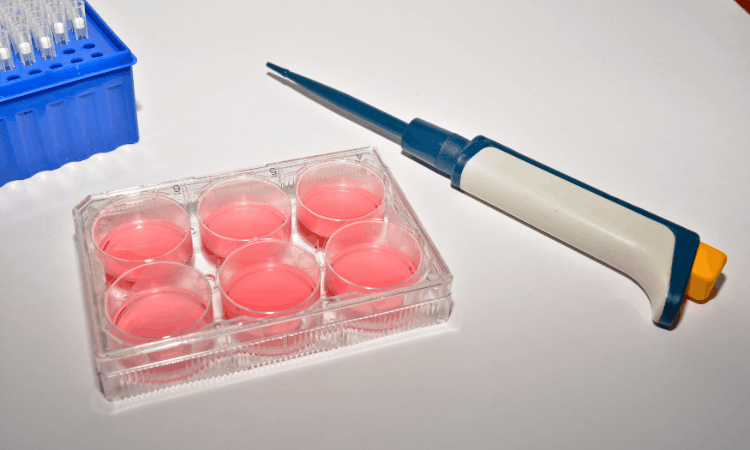
毒性测试:从药品到化妆品、医疗器械到食品的跨部门科学方法
毒性是指一种物质或材料对细胞产生的全部毒性影响。 这些影响可能表现为:细胞死亡(坏死或发作),细胞膜损伤,代谢活性减少,细胞增殖被抑制,形态变化. 毒性测试 能够对这些影响进行定量或定性衡量 试管 构成生物相容性评估的第一个和最重要的步骤。 我们的实验室根据GLP和GMP原则,按照各部门的监管要求进行细胞毒性测试。
在过去三年里,我们在实验室进行的细胞毒性研究的分布情况明确突出了各部门之间的差异:医疗器械制造商的要求约占所有研究的一半,而化妆品和个人护理产品排名第二,药品和生物产品排名第三。 每个部门的独特监管框架直接影响到测试设计和解释标准。 在文章中,我们将分享细胞毒性测试的科学基础、部门差异和实验室的实地经验。
毒性测试的科学基础和重要性
毒性测试被认为是生物兼容性评估的第一步。 如果某种物质或材料具有细胞毒性,通常就没有必要进行进一步测试(敏化、刺激和植入),因为细胞毒性表明细胞一级存在严重的不相容性。 因此,这项测试是检查病人/用户安全以及有效利用制造商资源的重要手段。
测试最显著的优点是不需要使用动物,并提供快速,成本效益高,可复制的结果. 这些基于细胞培养的方法完全符合"3R"原则的"取代"支柱. 然而,我们的实地经验表明,不应将细胞毒性测试仅仅视为一种"简单筛选"工具。 特别是在复杂的配方和生物产品中,测试设计和结果解释需要大量的专门知识.
氯毒性试验结果直接用于产品标签、编制安全数据表(SDS)、提交管制材料和认证生产质量。 此外,对原材料、添加剂、模具释放剂和消毒残留物的细胞毒性潜力的评价被认为是生产过程可靠性的一个指标。
按行业分列的毒性测试方法
医疗器械的毒性测试 根据《公约》第19条 ISO 10993-5:2009 (英语). 标准。 该标准规定通过将从设备或设备材料本身得到的提取物直接应用到细胞培养中来评估细胞毒性效应. 提取方法确定了三种基本方法:直接接触和agar上覆. 我们实验室在使用医疗器械时面临的最常见挑战是选择一种适合该器械物理形态的测试方法。 例如,直接接触方法可能会对表面不规则或含有颗粒的设备产生误导性结果;在这种情况下,更倾向于用agar上覆或修改取出协议.
化妆品和个人护理产品的毒性检测 需要使用 试管 根据欧盟化妆品条例(EC 1223/2009),禁止动物试验。 在这一部门中,最常用的是3T3 瑙鲁光毒性试验(经合组织TG 432)和RhE模型。 在我们的实地经验中,我们观察到,化妆品中的细胞毒性结果对产品的浓度和接触时间极为敏感。 同样的原料在不同浓度下可以显示出不同的细胞毒性特征;因此,在试验设计中必须考虑到产品的实际使用浓度。
药品和生物产品,细胞毒性测试按照ICH准则和药理学专著进行. 在这个部门,检测通常不作为细胞毒性筛查,而是作为细胞治疗方法(CAR-T、干细胞)安全评价的一部分。 对于生物产品,细胞毒性测试用于评估制造过程中使用的放出物的毒性(例如培养介质成分,转录剂),而不是产品本身. 个案研究: 在细胞疗法产品中,我们发现制造过程中使用的聚合物残留物具有细胞毒性,并有助于制造商优化其净化步骤.
食物和食物接触材料的毒性测试 用于食品添加剂和包装材料的安全评估。 在这一部门,测试通常按照欧洲食品安全局和林业发展局的准则进行。 根据我们的实地经验,我们观察到,对食品包装材料中的迁移产品的细胞毒性评估尤其具有挑战性,因为迁移的数量和持续时间因食物类型和储存条件的不同而有很大差异。
下表按行业概述了细胞毒性测试方法和监管参考。
| 部门 | 初级标准 | 通用试验方法 | 关键挑战 |
|---|---|---|---|
| 医疗器械 | ISO 10993-5:2009 (英语). | 提取、直接接触、agar上层;MTT/NRU/XTT | 选择适合设备物理形态的方法 |
| 化妆品 | 欧盟化妆品条例(EC 1223/2009) | 3T3 瑙鲁光毒性(TG 432),RhE模型;MTT | 模拟实际使用浓度 |
| 药物/生物产品 | 卫生研究所准则,药典 | 基于细胞的化验; MTT, XTT, 乳酸脱氢酶(LDH) | 对制造工艺残余物的评价 |
| 食品/食品接触材料 | 欧洲食品安全局,林业发展局准则 | 迁移摘要;MTT、NRU | 移民数量和期限的标准化 |
细胞活性测量方法:MTT、NRU和XTT的比较评价
在细胞毒性测定中,使用了各种测色方法来测量细胞的可行性. 这些方法通过测量细胞代谢活性或膜完整性,间接决定活细胞的数量. 三种最常用的方法是MTT,NRU和XTT.
MTT分析 其原理是MTT 四zo盐被细胞中的线粒体脱氢酶酶还原,将其转化为紫色的福玛赞晶体. 活细胞中产生的福马赞晶体被溶解入合适的溶剂并被分光测量. MTT测定法是一种快捷,经济,广泛使用的方法. 然而,根据我们的实地经验,我们观察到,MTT化验可能受到某些物质的干扰。 例如,具有强烈还原特性的物质(scorbic acid,某些多酚)可以直接降低MTT,导致假阳性结果. 在这种情况下,我们建议采用诸如瑙鲁或XTT化验等替代方法进行核查。
NRU( 新红色取景) 分析 其基础是活细胞在它们的淋巴质中积累中性红染料的能力. 活细胞积极取出中性红色并存放于淋巴质;然而活细胞不能取出这种染料. 染料用酸性醇溶液取出并分光测量. NRU测定法专门用于评价膜完整性和淋巴功能;它可能比MTT测定法提供更稳定的结果. 在我们的实验室中,我们使用NRU测定法作为涉嫌引起MTT干扰的物质的主要验证方法.
XTT 分析 is based on the principle of the reduction of XTT—a tetrazolium salt similar to that used in the MTT assay—by cells. The most significant advantage of XTT is that it forms a water-soluble formazan product; therefore, the dissolution step required in the MTT assay is not necessary. The XTT assay is faster and requires fewer procedural steps. However, there are situations where XTT exhibits lower sensitivity compared to MTT; this difference becomes particularly noticeable at low cell densities and in slowly proliferating cell lines.
The table below provides a comparative summary of the key characteristics of the MTT, NRU, and XTT methods.
| 特征 | MTT 移动 | 瑙鲁 | 自动调试 |
|---|---|---|---|
| 计量原则 | Mitochondrial dehydrogenase activity | Neutral red uptake by lysosomes | 脱硫还原(可溶于水的福马赞) |
| Formazan Solubility | Insoluble (requires a solubilization step) | Dye extraction required | Water-soluble (no solubilization step required) |
| Risk of Interference | High (with reducing agents) | Low | 温和 |
| Incubation Time | 2–4 hours | 2–4 hours | 1–2 hours |
| Use in Our Laboratory | Primary screening test (all sectors) | Confirmation in cases of suspected MTT interference | Rapid screening and high-throughput studies |
Implementation of Cytotoxicity Tests and Field Observations in Our Laboratory
In our GLP- and GMP-certified laboratory, we conduct cytotoxicity tests in accordance with industry-specific regulatory requirements. Our testing process begins with a comprehensive preliminary evaluation: the test substance’s physicochemical properties, solubility, pH value, chemical structure, and potential interferences are examined. Based on this information, the most appropriate test method (extraction, direct contact, or agar overlay) and cell viability measurement technique (MTT, NRU, or XTT) are determined.
One of the most common challenges we encounter in our fieldwork is the solubility of the test substance. For substances that are insoluble in water, extraction efficiency may decrease, leading to false-negative results. In such cases, we perform extraction using non-polar solvents (vegetable oil, DMSO) and evaluate the results in conjunction with those from polar extracts. Another issue is interference in spectrophotometric measurements caused by colored or opaque substances. In such cases, we prepare appropriate blank samples or switch to alternative measurement methods (e.g., fluorescence-based tests).
One of our laboratory’s key advantages is its ability to offer customized testing strategies for different device and product types. For liquid products, direct application is used; for solid devices, direct contact or extraction; for materials containing particles, agar overlay; and for devices with irregular surfaces, modified extraction protocols are employed. This flexibility ensures that the unique characteristics of each product are accurately evaluated.
Test results are presented in a comprehensive test report format compliant with ISO 10993-5:2009 (medical devices) or the relevant industry standard. The report includes sections on the test method, cell line, extraction conditions, cell viability data, morphological observations, statistical analyses, and interpretation. Our reports comply with the requirements of the EU MDR (2017/745), FDA 510(k), the EU Cosmetics Regulation, ICH, and EFSA.
常见问题
One of the most common questions we receive about cytotoxicity testing is which test method is appropriate for which product. The selection depends on the product’s physical form, industry sector, and regulatory requirements. For medical devices, extraction, direct contact, or agar overlay methods are used under ISO 10993-5; for cosmetics, RhE models and 3T3 NRU; for pharmaceuticals, cell-based tests in accordance with ICH guidelines; and for food contact materials, migration extracts are used. Our laboratory evaluates your product’s characteristics and recommends the most appropriate method.
The difference between MTT, NRU, and XTT tests is also frequently asked. MTT measures mitochondrial activity and requires the dissolution of formazan crystals; it may be subject to interference from reducing agents. The NRU assay evaluates lysosomal function and provides information on membrane integrity; the risk of interference is low. The XTT assay, on the other hand, is faster and requires fewer steps because it produces a water-soluble formazan product. The choice of method depends on the product’s characteristics and the laboratory’s preference; however, all methods are validated and internationally recognized.
Regarding the test duration, the total time—including cell culture preparation, extraction, incubation, and measurement steps—is generally 2–4 weeks. Including reporting and quality assurance reviews, this period may extend to 4–6 weeks. As for which products are subject to cytotoxicity testing, the answer is that a cytotoxicity assessment is required for all products that come into contact with cells or tissues. This is the first and most fundamental step in biocompatibility assessment.
Finally, there is often curiosity about what should be done if a product is found to be “cytotoxic” as a result of the cytotoxicity test. In this case, the manufacturer must review the material composition, the production process (mold release agents, solvents, additives), and the sterilization method. Our laboratory offers advanced analytical methods—such as extraction fractionation, chemical analysis, and alternative material testing—to identify the source of the problem. The goal is to ensure the product’s safety and compliance with regulatory requirements.
A cytotoxicity test provides scientific evidence of your product’s safety at the cellular level. Whether it is a medical device, cosmetic, pharmaceutical product, or food-contact material, a properly designed cytotoxicity study forms the foundation of the biocompatibility profile and represents the first critical step in the regulatory approval process. Our laboratory evaluates your product’s cellular compatibility to the highest scientific standards using MTT, NRU, and XTT methods, along with extraction, direct contact, and agar overlay techniques. To be your trusted partner on your product’s biocompatibility journey, contact us.


