

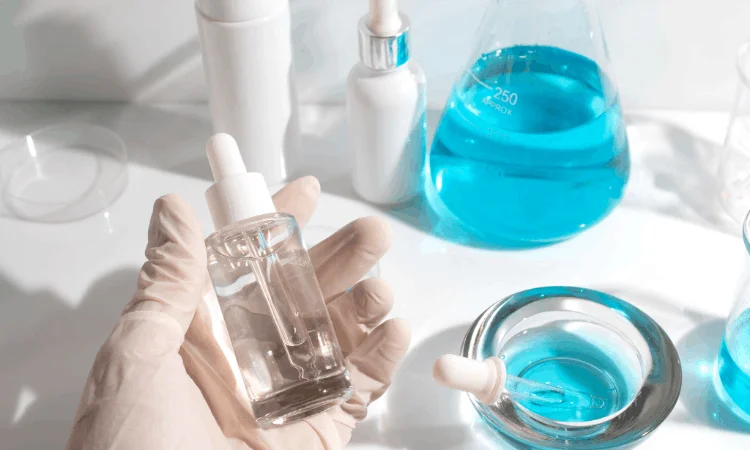
Pyrogen Test: Scientific Assessment of the Risk of a Fever Response in Parenteral Products
Parenteral drugs, biologics, vaccines, cell therapies, infusion solutions, and medical devices that come into contact with blood are subject to the highest safety standards because they are administered directly into the bloodstream or tissues. Pyrogenic contamination in these products can cause a febrile response in patients, leading to serious clinical conditions. Pyrogen testing provides a biological assessment of a product’s or material’s potential to induce a febrile response in the body. Our laboratory conducts pyrogen testing in accordance with Ph. Eur. 2.6.8 and USP §151 standards, under GLP principles and with a team of experienced toxicologists.
The Scientific Basis and Importance of Pyrogen Test
Pyrogens are substances that cause a fever response in the body. These substances may include bacterial endotoxins (lipopolysaccharides released from the cell walls of Gram-negative bacteria), cell wall components derived from Gram-positive bacteria, viral contaminants, fungal-derived substances, particulate matter, and even certain chemical agents. Pyrogenic reactions can result in high fever, chills, hypotension, septic shock, and, in rare cases, death. Therefore, the meticulous evaluation of pyrogen contamination—particularly in products administered intravenously—is of vital importance.
Pyrogen testing provides a comprehensive safety assessment that covers not only known endotoxins but also non-endotoxin pyrogens. In this regard, it fundamentally differs from the LAL (Limulus Amebocyte Lysate) test, which can detect only Gram-negative bacterial endotoxins. Some biological products, cell therapies, and complex formulations may contain pyrogens that the LAL test cannot detect; therefore, pyrogen testing is indispensable for these products.
The importance of pyrogen testing also stems from regulatory requirements. Pharmacopoeia monographs clearly specify which test is mandatory for specific products. For example, while pyrogen testing is generally mandatory for biological products, vaccines, and cell therapies, the LAL test may be sufficient for simple chemical formulations and infusion solutions. However, depending on the nature of the product and the manufacturing process, it may be necessary to perform both tests. Pyrogen test results are directly used for product release, the regulatory approval process, and patient safety.
Comparative Analysis of Ph. Eur. 2.6.8 and USP <151> Standards
Ph. Eur. 2.6.8 (European Pharmacopoeia) and USP <151> (United States Pharmacopeia) constitute the two internationally recognized primary references for pyrogen testing. Both standards adopt the same basic approach: measuring the increase in rectal temperature following intravenous administration in a rabbit model. However, there are some significant differences in experimental design and interpretation criteria.
In both standards, the test is conducted on healthy adult rabbits (preferably New Zealand White). Initially, three rabbits are used; if the results are inconclusive, the test is repeated with five additional rabbits (for a total of eight rabbits). The test substance is administered intravenously via the ear vein; the injection volume is typically 10 milliliters per kilogram, although different volumes may be specified in the product-specific monograph. Temperature is measured rectally; readings are recorded at specific intervals before and after injection (typically every thirty minutes for three hours).
The initial temperature criteria are similar in both standards: individual rabbits’ initial temperatures must be between 38.0 and 39.8°C, and the difference between animals must not exceed one degree. However, there are differences in the acceptance and rejection criteria. According to Ph. Eur. 2.6.8, if the total temperature increase across three rabbits is 1.15°C or less, the product is considered pyrogen-free; if the total increase exceeds 2.65°C, the product contains pyrogens and the test is considered a failure. Results falling between these two values are considered questionable, and the test is repeated with five additional rabbits. According to USP §151, the acceptance criterion is 1.4°C, and the rejection criterion is 2.8°C. In the eight-rabbit test, the acceptance criterion is 2.80°C for Ph. Eur. and 3.7°C for USP.
The table below provides a comparative summary of the key characteristics of the Ph. Eur. 2.6.8 and USP <151> standards.
| Characteristic | Ph. Eur. 2.6.8 | USP <151> |
|---|---|---|
| Animal Model | Healthy adult rabbit (New Zealand White) | Healthy adult rabbit (New Zealand White) |
| Number of Animals | 3 (initial); +5 if results are inconclusive (total 8) | 3 (initial); +5 if results are inconclusive (total 8) |
| Route of Administration | Intravenous (ear vein) | Intravenous (ear vein) |
| Acceptance Criteria (3 rabbits) | Total increase ≤1.15°C | Total increase ≤1.4°C |
| Exclusion Criteria (3 rabbits) | Total increase >2.65°C | Total increase >2.8°C |
| Doubtful Range (3 rabbits) | 1.15–2.65°C → 5 additional rabbits | 1.4–2.8°C → 5 additional rabbits |
| Acceptance Criteria (8 rabbits) | Total increase ≤2.80°C | Total increase ≤3.7°C |
Key Differences Between the Pyrogen Test and the LAL Test
The pyrogen test and the LAL test are two evaluation methods that are often confused but are fundamentally different. The LAL test is an in vitro method capable of detecting only Gram-negative bacterial endotoxins (lipopolysaccharides). This test is based on the principle that a lysate derived from the blood cells of the horseshoe crab (Limulus polyphemus) exhibits a clotting reaction in the presence of endotoxins. The LAL test is rapid, economical, and provides quantitative results; however, it cannot detect non-endotoxin pyrogens.
The pyrogen test, on the other hand, is an in vivo method that covers all classes of pyrogens. Bacterial endotoxins, Gram-positive bacterial products, viral contaminants, fungal-derived substances, particles, and chemical pyrogens can be detected using this test. For this reason, pyrogen testing is mandatory, particularly for biological products, vaccines, cell therapies, and complex formulations. However, pyrogen testing requires the use of animals, is more expensive, takes longer, and does not provide quantitative results (it yields only qualitative results indicating the presence or absence of pyrogens).
The choice of which test to use depends on the nature of the product and the requirements specified in the pharmacopeia monograph. In some cases, it may be necessary to perform both tests together. For example, when both the endotoxin limit and the overall pyrogenicity profile of a biological product need to be evaluated, the LAL and pyrogen tests are used complementarily.
Monocyte Activation Test (MAT): A Modern Alternative
The European Pharmacopoeia accepts the Monocyte Activation Test (MAT) as an alternative to the pyrogen test under certain conditions. MAT is an in vitro test that measures the production of cytokines (particularly IL-1β, IL-6, and TNF-α) by human monocytes in response to pyrogenic substances. This method covers all classes of pyrogens and eliminates the need for animal testing. MAT is viewed as a promising alternative, particularly for biological products and cell therapies.
However, product-specific validation and regulatory approval may be required for MAT to replace the pyrogen test. The suitability of MAT for each product must be evaluated based on the product’s composition, manufacturing process, and potential sources of pyrogens. Our laboratory offers MAT as an alternative to pyrogen testing and provides scientific consultation to determine the most appropriate testing strategy for your product.
Which Products Require Pyrogen Test?
Pyrogen testing is required for all products administered directly into the bloodstream or tissues that carry a risk of pyrogen contamination. Pyrogen testing is mandatory for parenteral drugs (injectable solutions, infusion fluids, intravenous drugs) because these products are administered directly into the bloodstream, and pyrogen contamination poses a life-threatening risk. Pyrogen testing is also mandatory for biological products (monoclonal antibodies, recombinant proteins, enzymes, hormones); the risk of pyrogen contamination is high in biological manufacturing processes, and the LAL test cannot detect all pyrogens.
Pyrogen testing is mandatory for vaccines (inactivated vaccines, toxoid vaccines, recombinant vaccines); since vaccines directly stimulate the immune system, the risk of inducing a pyrogenic response is high. Pyrogen testing is also mandatory for cell and gene therapies (CAR-T cells, mesenchymal stem cells, viral vectors); complex biological matrices can be a source of non-endotoxin pyrogens. Pyrogen testing may be required for medical devices (implants, catheters, dialysis machines, blood bags); in accordance with ISO 10993-11, device extracts may need to be evaluated for pyrogenicity.
Pyrogen testing is mandatory for dialysis and infusion solutions (peritoneal dialysis fluids, hemodialysis solutions, Ringer’s solutions); pyrogen limits are strictly controlled in products administered parenterally in large volumes. Pyrogen testing may also be required for certain topical products (ophthalmic solutions, certain wound care products); pyrogen control may be necessary for products applied to sensitive tissues such as the eyes and open wounds.
Conducting Pyrogen Tests in Our Laboratory
In our GLP-certified laboratory, we conduct pyrogen tests in accordance with Ph. Eur. 2.6.8 and USP <151> in full compliance with international standards. Our testing process begins with a comprehensive preliminary evaluation. The physicochemical properties of the test substance, available toxicity data, and the requirements in the pharmacopoeia monograph are reviewed. Based on this information, the most appropriate test protocol and test volume are determined.
Healthy adult New Zealand White rabbits are used for the test. A pre-test acclimatization period of at least seven days is implemented; this period allows the animals to adjust to laboratory conditions and minimizes stress factors. Rabbits weighing at least 1.5 kg are selected; their initial body temperatures should be between 38.0 and 39.8°C, and the difference between animals should not exceed one degree. Animals that have not been used in pyrogen testing within the past two weeks are preferred.
The temperature and humidity in the test chamber are maintained at constant levels (temperature: 20–24°C; humidity: 40–60%); noise and stress factors are minimized. The test substance is prepared as specified in the product monograph; all solvents, syringes, and equipment used are depyrogenized in advance. Injection is administered slowly intravenously via the ear vein; aseptic conditions are strictly maintained. Temperature measurements are taken using thermometers with calibration certificates or telemetry systems; measurement accuracy is ±0.1°C.
The observation period lasts at least three hours after injection; temperature is recorded every thirty minutes. The maximum increase relative to the baseline temperature is calculated and interpreted according to pharmacopoeia criteria. Veterinary supervision is provided during and after the test; appropriate intervention is performed in the event of a severe reaction. After the test, the animals are allowed to rest; a minimum of forty-eight hours is waited before reuse, and it is verified that the previous response was within acceptable limits.
One of our laboratory’s key advantages is that pyrogen test results can be directly integrated into your regulatory submissions. Complete study reports compliant with pharmacopeia templates meet the requirements of EU, U.S., and other international regulatory authorities. Additionally, by offering complementary and alternative methods such as the LAL test and the Monocyte Activation Test (MAT), we provide the most comprehensive pyrogen safety assessment for your product.
Frequently Asked Questions
One of the most common questions we receive regarding pyrogen testing is which standard to choose between Ph. Eur. 2.6.8 and USP <151>. The choice depends on your product’s target market. While the Ph. Eur. standard is used as a reference in the European Union and many international markets, the USP standard applies in the United States and certain other regions. For global markets, a testing strategy compliant with both standards is recommended.
We are also frequently asked whether the LAL test can serve as a substitute for pyrogen testing. For some products, yes; for others, no. Pharmacopoeial monographs specify which test is mandatory for specific products. As a general rule, the LAL test may be sufficient only for simple chemical formulations that carry a risk of endotoxins; the pyrogen test is required for biological products and complex matrices.
There is also curiosity about whether the Monocyte Activation Test (MAT) can serve as an alternative to the pyrogen test. Yes; the European Pharmacopoeia accepts the MAT as an alternative to the pyrogen test under certain conditions. The MAT measures cytokine production by human monocyte cells in response to pyrogenic substances and covers all classes of pyrogens. However, product-specific validation and regulatory approval may be required. Regarding the test duration, the test itself takes one to two days; however, including animal acclimatization, pre-screening, and reporting, the total duration is typically two to three weeks.
Pyrogen testing is one of the cornerstones of the safety of parenteral products and medical devices. With our tests fully compliant with Ph. Eur. 2.6.8 and USP <151> standards, we evaluate your products’ potential to induce a febrile response with the highest scientific rigor. Our GLP-certified laboratory, with its experienced staff and state-of-the-art infrastructure, is your reliable partner for pyrogen testing needs. To demonstrate your product’s pyrogen safety, contact us.


