

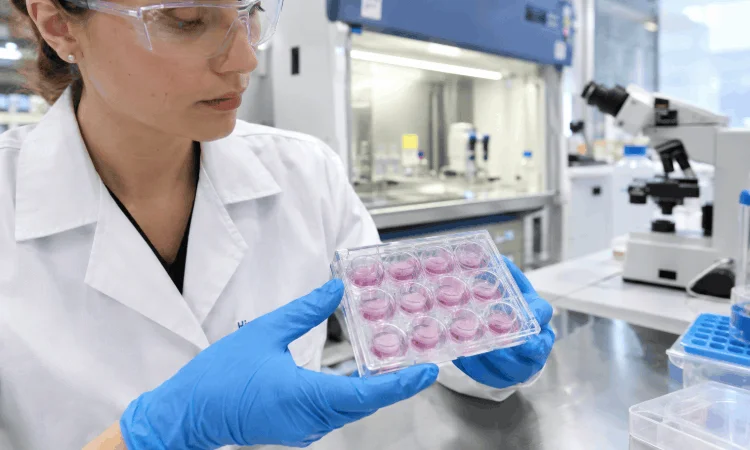
In Vitro Skin Irritation (RhE): Reliability at the Cellular Level Using Reconstituted Human Epidermis Models
Skin irritation is a localized, typically reversible inflammatory response resulting from a substance’s contact with the skin. Traditionally, this response was evaluated using in vivo tests (OECD TG 404) conducted on rabbit models; however, in line with the 3R principles and scientific advancements, in vitro methods based on reconstituted human epidermis (RhE) models have come to the forefront. RhE models are three-dimensional tissue cultures that preserve the multilayered structure, lipid barrier, and metabolic activity of human skin. These models are recognized as the primary method for assessing the skin irritation potential of both chemical substances (OECD TG 439) and medical devices (ISO 10993-23).
RhE tests have constituted the vast majority of the skin irritation studies we have conducted in our laboratory over the past three years. During this process, we observed not only the high predictive power of RhE models but also certain practical challenges and critical points that require attention. In this article, we will share the scientific basis of RhE models, the application process, and our laboratory’s field experience.
The Scientific Basis and Structure of RhE Models
RhE models are three-dimensional tissue cultures derived from human keratinocytes that mimic the multilayered structure of the epidermis. These models contain differentiated cell layers ranging from the basal layer to corneocytes; this allows for the accurate modeling of chemical penetration through the skin and the epidermal response. RhE tissues also preserve the lipid barrier and metabolic activity; these characteristics are critical for realistically evaluating the effects of test substances on the skin.
Commercially available RhE models include EpiSkin™, EpiDerm™, SkinEthic™ RHE, and LabCyte EPI-MODEL24. Each model offers different cell sources, culture conditions, and barrier properties; however, all are OECD-validated and internationally recognized. In our laboratory, we select the most appropriate model based on the study’s objective and the properties of the test substance. For example, EpiDerm™, which has a thicker stratum corneum layer, is preferred for substances where barrier penetration is critical, while EpiSkin™, with its thinner structure, offers advantages in rapid screening tests.
The basic principle of the RhE test involves applying the test substance to the tissue model for a specific period of time and then measuring cell viability using the MTT assay. The MTT assay is based on the principle that live cells reduce MTT tetrazolium salt via mitochondrial dehydrogenase enzymes, converting it into purple-colored formazan crystals. The formazan crystals are dissolved in a suitable solvent and measured spectrophotometrically. The percentage of cell viability is calculated by comparison with a negative control; if viability is below 50 percent, the substance is classified as “irritating.”
Application of RhE Under OECD TG 439 and ISO 10993-23
OECD TG 439 is an in vitro test guideline based on RhE models for evaluating the skin irritation potential of chemical substances and mixtures. Under TG 439, the test substance is typically applied to the RhE tissue for 15 minutes or 4 hours; this is followed by a 42-hour incubation period and a measurement of cell viability via the MTT assay. TG 439 provides sufficient data for GHS classification and is widely used, particularly for cosmetic products, personal care products, cleaning agents, and industrial chemicals.
ISO 10993-23, on the other hand, defines skin irritation tests within the scope of biocompatibility assessment for medical devices. This standard specifies the application of extracts prepared from the device in accordance with ISO 10993-12 to RhE models. The most significant innovation in ISO 10993-23:2021 is the priority it gives to in vitro methods; the standard recommends the use of validated RhE models as the first choice in skin irritation assessment. Furthermore, in vitro it acknowledges that in vivo testing may be used as an alternative in cases where the in vitro method is not appropriate or the results are inconclusive.
In our laboratory, the most common challenge we face when performing RhE testing on medical devices is the preparation of device extracts. In accordance with ISO 10993-12, extraction is performed using specific volumes of polar (serum-containing medium) and non-polar (vegetable oil) solvents per unit surface area or mass of the device. However, some devices (for example, those containing a high proportion of lipophilic polymers) may not be adequately represented in non-polar extracts; in such cases, we perform additional chemical analyses to verify the extraction efficiency. Case example: In a silicone-based wound dressing, the RhE test yielded a negative result in the non-polar extract; however, chemical analysis showed that the extract did not contain sufficient amounts of the expected components. We repeated the test after optimizing the extraction time and temperature and obtained the correct result.
The table below summarizes the key differences between RhE test procedures under OECD TG 439 and ISO 10993-23.
| Characteristic | OECD TG 439 | ISO 10993-23 |
|---|---|---|
| Scope | Chemicals, mixtures, cosmetics, cleaning products | Medical devices and biomaterials |
| Sample Preparation | Test substance is applied directly (liquid, solid, paste) | Extraction in accordance with ISO 10993-12 (polar and non-polar) |
| Exposure Time | 15 minutes or 4 hours | Depending on the device’s clinical usage time (15 minutes – 24 hours) |
| Evaluation | Cell viability (MTT assay, 50% threshold) | Cell viability (MTT assay) + morphological changes |
| Regulatory References | EU REACH, CLP, EU Cosmetics Regulation, GHS | EU MDR (2017/745), ISO 10993-1, FDA 510(k) |
| Challenges in Our Laboratory | MTT interference in colored/opaque materials | Extraction efficiency in lipophilic devices |
Practical Challenges and Solutions Encountered in the RhE Test
Although RhE models have high predictive power, some practical challenges may arise in practice. The most common issues we encounter in our laboratory’s field experience are as follows:
MTT interference: Certain test substances (e.g., strong reducing agents, colored compounds, opaque particles) can directly interfere with the MTT assay and lead to false-positive or false-negative results. In such cases, we prepare appropriate blank controls or switch to alternative measurement methods (e.g., NRU or LDH release). Case example: A plant extract containing high concentrations of polyphenols directly reduced the MTT, resulting in a false-positive result; we confirmed the correct result using the NRU assay.
Solubility issues: Substances that are insoluble in water may not be applied uniformly to RhE tissue, which can lead to false-negative results. In such cases, we dissolve the test substance in a suitable carrier (e.g., mineral oil or DMSO) before application and verify in advance that the carrier itself is non-toxic.
Tissue integrity: The transport and storage conditions of RhE tissues can affect tissue integrity. In our laboratory, barrier function (e.g., transepidermal water loss or electrical resistance measurement) is verified upon receipt of the tissues, and only tissues that meet the acceptance criteria are used in the test. This preliminary check enhances the reliability of the results.
Advantages and Limitations of RhE Models
The most significant advantage of RhE models is that they mimic the structural and functional characteristics of human skin, enabling the direct extrapolation of results to human biology. While differences between animal and human skin can limit the predictive power of in vivo tests, RhE models eliminate this issue because they use human cells. Furthermore, RhE tests fully eliminate the use of animals, thereby fully meeting the “Replacement” principle of the 3Rs; they shorten testing time, reduce costs, and simplify ethical review board approval processes.
However, RhE models also have certain limitations. These models consist solely of the epidermal layer; they do not include other components of the skin, such as the dermis, blood vessels, immune cells, and nerve endings. Therefore, processes such as dermal-epidermal interactions, vascular responses, and neurogenic inflammation cannot be fully modeled. Additionally, certain test substances (e.g., water-insoluble solids, strong acids/bases) may yield inaccurate results in RhE models; in such cases, additional evaluation or in vivo validation may be required. Aware of these limitations, our laboratory tailors the testing strategy for each product and provides complementary analyses when necessary.
Conducting RhE Tests in Our Laboratory
In our GLP- and GMP-certified laboratory, we conduct RhE tests in full compliance with international standards under OECD TG 439 and ISO 10993-23. Our testing process begins with a comprehensive preliminary evaluation: The test substance’s physicochemical properties, solubility, pH value, and potential interferences are examined. For medical devices, the device’s material composition, manufacturing process, sterilization method, and clinical usage scenario are evaluated in detail. Based on this information, the most appropriate RhE model and test protocol are determined.
During the test, RhE tissues are selected according to acceptance criteria, and the test substance or extract is applied to the tissue. Following the incubation period, cell viability is measured using the MTT assay.
The results are interpreted by comparing them with negative and positive controls. Morphological evaluation serves as an important complement to the numerical data; tissue integrity, cell shape, and layer structure are examined under a microscope.
One of our laboratory’s key advantages is that test results can be directly integrated into your regulatory submissions. Reports compliant with OECD TG 439 are valid for EU REACH, CLP, and cosmetic regulations. Reports compliant with ISO 10993-23 are accepted for the EU MDR (2017/745), FDA 510(k), and other medical device regulations. Our reports include the test method, RhE model details, application duration, cell viability results, morphological observations, and an interpretation section.
Frequently Asked Questions
One of the most common questions we receive about the RhE test is which RhE model to select. The choice depends on the properties of the test substance and the purpose of the study. EpiDerm™ is preferred for substances where barrier penetration is critical, as it has a thicker stratum corneum layer; EpiSkin™, on the other hand, is preferred for rapid screening tests. Our laboratory evaluates the properties of your product and recommends the most suitable model.
In vitro RhE test results are also frequently asked about in terms of whether they can replace in vivo tests. Yes, validated RhE models allow for classification without the need for in vivo testing. OECD TG 439 and ISO 10993-23 recognize these methods as primary tests. However, if test results are inconclusive, the substance is insoluble in water, or the regulatory authority specifically requests it, in vivo validation may be required.
Regarding the test duration, the RhE test typically yields results within 1–2 weeks; the total duration, including reporting and quality assurance review, is 3–4 weeks. If in vivo validation is required, this timeframe may extend to 4–6 weeks. As for which products are subject to the RhE test, the answer is that a skin irritation assessment is required for all chemicals and medical devices that come into contact with the skin. OECD TG 439 applies to chemicals, while ISO 10993-23 applies to medical devices.
Finally, there is often a question about what should be done if a product is classified as “irritating” based on the RhE test results. In this case, the manufacturer must review the formulation or material composition, reduce the concentration of the irritating component, or replace it with an alternative ingredient. Our laboratory offers advanced analytical methods, such as extraction fractionation and chemical analysis, to identify the source of the problem.
RhE models form the foundation of a modern approach that combines scientific accuracy and ethical responsibility in the assessment of skin irritation. With our RhE tests, which are fully compliant with OECD TG 439 and ISO 10993-23 standards, we evaluate the skin safety of your products according to the highest scientific standards—without the need for animal testing. Our GLP- and GMP-certified laboratory, equipped with validated RhE models, an experienced team, and field expertise, is your reliable partner for all your skin irritation testing needs.
To demonstrate your product’s skin safety, contact us.


